

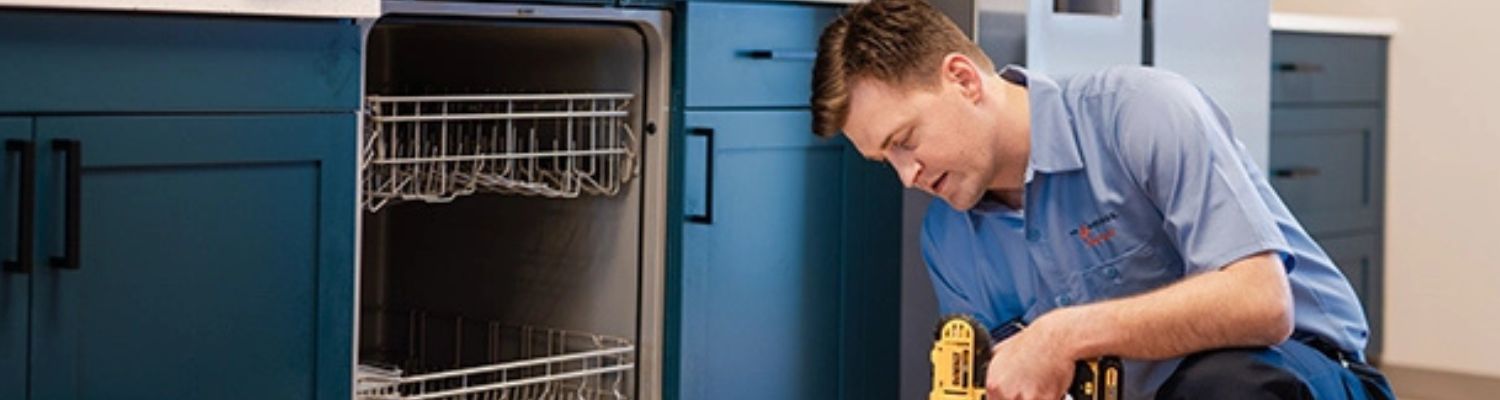
A leaking dishwasher may seem like a minor inconvenience at first, but if left unaddressed, it can cause serious damage to your kitchen floors, cabinets, and walls. Water leaks can lead to mold growth, warped wood, and costly repairs. Understanding the causes of dishwasher leaks and fixing them early can save you time, money, and stress.
Even small leaks can gradually damage your kitchen over time. Water can seep under flooring, weaken cabinetry, and create the perfect environment for mold and mildew. In addition to structural damage, leaks may also signal internal component failure that could worsen if ignored.
The door gasket forms a watertight seal when the dishwasher is running. Over time, it can crack, loosen, or become brittle due to heat and detergent residue. When this happens, water escapes during wash cycles.
If the door latch does not close tightly, the dishwasher cannot seal properly. Even a slightly open door can allow water to leak out during operation.
A blocked drain hose can cause water to back up inside the dishwasher, leading to leaks. Kinks, cracks, or improper installation of the hose can also result in water escaping.
Improper loading can redirect water spray toward the door seal instead of the dishes. This increases pressure on the gasket and may cause leaks, even if all components are functioning normally.
The water inlet valve controls how much water enters the dishwasher. If it is damaged or stuck open, excess water may overflow and leak onto your kitchen floor.
Start by observing when the leak occurs—during filling, washing, or draining. Check under the dishwasher and around the door for moisture. Inspect the gasket, hose connections, and bottom panel for signs of water stains or residue.
If the gasket is worn or damaged, replacing it is usually a simple and affordable fix. Clean the groove thoroughly before installing the new seal to ensure a proper fit.
Ensure the door closes firmly. Adjust or replace the latch if it feels loose or fails to lock securely.
Disconnect the drain hose and remove any blockages. If the hose is cracked or damaged, replacing it will prevent future leaks.
If your dishwasher is overfilling, the inlet valve may need replacement. This repair often requires professional expertise to ensure correct installation.
Regular maintenance helps avoid leaks. Clean the gasket, avoid overloading, use the right detergent, and inspect hoses periodically. These simple steps can extend the life of your dishwasher and protect your kitchen.
If leaks persist despite basic fixes, it’s time to contact a professional technician. Electrical components, valves, and internal seals require specialized tools and knowledge to repair safely.
Leaking dishwashers should be addressed immediately to prevent serious kitchen damage. By identifying the cause early and applying the right fix, you can keep your appliance running efficiently and your kitchen safe.
Contact Matrix HVAC & Appliances today for expert dishwasher repair services that keep your kitchen running clean and dry.