

An oven that doesn’t heat evenly can turn cooking into a frustrating task. From undercooked centers to over-browned edges, uneven heating affects both taste and texture. If you’ve been wondering why your oven is giving inconsistent results, the issue may be deeper than a simple setting adjustment. Understanding the common causes behind uneven heating can help you take timely action and restore your oven’s performance. Here’s a detailed breakdown of what could be going wrong and how expert repair services like Matrix Solutions can help.
Most modern ovens rely on two heating elements — one at the top for broiling and one at the bottom for baking. When either of these elements becomes faulty or burns out, the oven can no longer distribute heat properly. This often results in one side of your dish cooking faster than the other. A visual inspection may reveal burnt spots, swelling, or areas that are not glowing red when the oven is on.
The temperature sensor is responsible for monitoring and regulating heat inside the oven. If this sensor is damaged or misaligned, the appliance may overheat or underheat in certain zones. This inconsistency can cause irregular cooking patterns, making it difficult to achieve desired results. A defective sensor often leads to fluctuating temperature readings.
Proper airflow plays a critical role in consistent heating. When racks are overcrowded or when food is placed too close to the walls, air circulation is restricted. Some ovens also come with fans that help distribute heat evenly — if the fan stops working, your oven may develop hot spots and uneven temperature zones.
In convection ovens, the fan and blower system is essential for circulating hot air evenly. If the fan motor fails or the fan blades become clogged with grease and debris, the oven will not maintain uniform heat. You may notice that food cooks faster on one side or that the top and bottom of your dish require different cooking times.
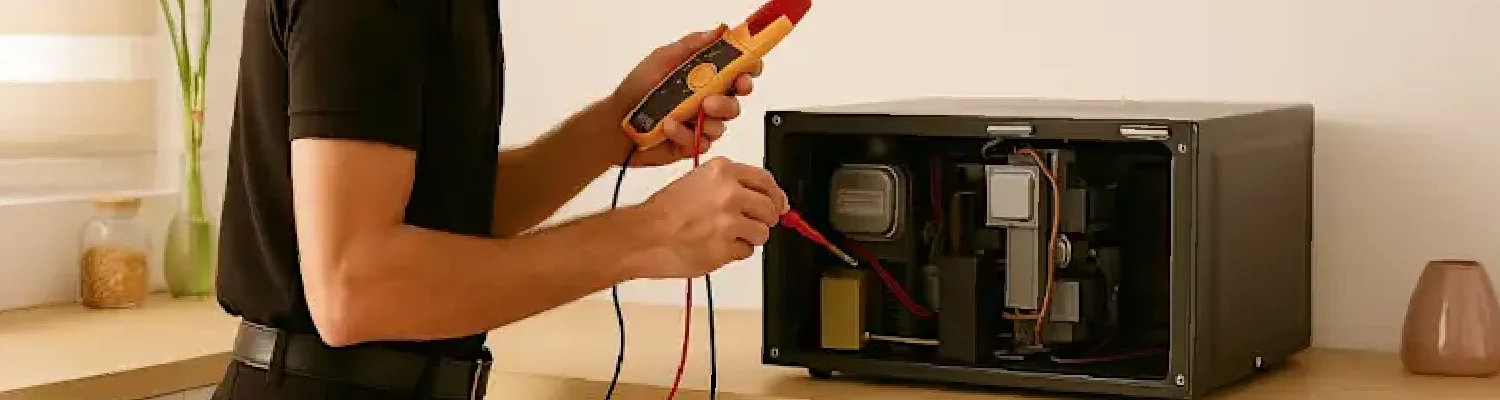
A trained technician can quickly assess the condition of your heating elements and replace them if necessary. Quality replacement parts ensure long-term performance, preventing future uneven heating issues.
If the sensor is giving incorrect readings, a professional can recalibrate it or install a new one. This ensures precise temperature control, allowing your oven to cook food uniformly every time.
Experts can clean the fan blades, lubricate moving parts, and repair or replace the fan motor. Proper fan operation is essential, especially for convection-based ovens where air movement determines cooking quality.
Sometimes uneven heating is caused by multiple issues. A thorough inspection by a trusted appliance repair service ensures all components — including wiring, thermostats, seals, and controls — are functioning correctly.
• Your oven consistently burns food on one side.
• The heating element doesn’t glow evenly.
• The fan is making unusual noises or not spinning.
• Temperature settings don’t match actual performance.
• You notice burning smells or smoke inside the oven.
Uneven heating is not just inconvenient — it can worsen over time and lead to complete oven repair failure. Professional repair ensures safety, efficiency, and long-lasting performance.
An oven that isn’t heating evenly can disrupt your cooking routine, but the good news is that most issues are easy to diagnose and fix with expert help. From faulty heating elements to malfunctioning fans, timely repairs can restore your oven’s performance and extend its lifespan. For accurate diagnosis and reliable repair services, Matrix Solutions provides professional, affordable, and quick appliance repair to keep your kitchen running smoothly.